All Adaptation Equity Resources
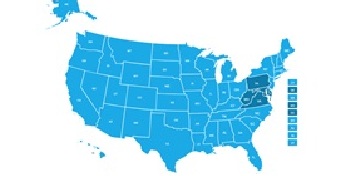
This tab includes all adaptation equity resources in the Adaptation Clearinghouse. Apply filters to view resources for a particular region or state, or search by sector. You may also sort by source of disproportionate risk.
Resources are automatically presented by date, but can also be sorted by network rating and title.
553 results are shown below.
Filter by States AffectedSelect states to filter this list
All
Alabama Alaska American Samoa Arizona Arkansas California Colorado Connecticut Delaware District of Columbia Florida Georgia Guam Hawaii Idaho Illinois Indiana Iowa Kansas Kentucky Louisiana Maine Maryland Massachusetts Michigan Minnesota Mississippi Missouri Montana Nebraska Nevada New Hampshire New Jersey New Mexico New York North Carolina North Dakota Northern Marianas Islands Ohio Oklahoma Oregon Pennsylvania Puerto Rico Rhode Island South Carolina South Dakota Tennessee Texas Utah Vermont Virgin Islands Virginia Washington West Virginia Wisconsin Wyoming
Resource
November 2015
The Washington Chapter of the American Planning Association offers a website focused on climate impacts, adaptation and resilience. The site links to many issue briefs which demonstrate detailed climate adaptation and mitigation strategies for local governments in Washington State.
Resource Category: Adaptation Websites
See Resource Login to Add to My Resource List
Resource
November 2015
From the Union of Concerned Scientists (UCS), this report explores the increased risks faced by socially vulnerable populations to sea-level rise. Building on prior research finding that elderly, minorities, and poor populations will be disproportionately affected by climate change, the paper presents an analytical framework for identifying “climate equity hotspots,” or places where socially vulnerable people live that are also at high risk for coastal flooding.
Authors or Affiliated Users: Rachel Cleetus, Ramon Bueno, Kristina Dahl
Resource Category: Assessments
See Resource Login to Add to My Resource List
Resource
November 2015
In November 2015, the University of Arizona Native Nations Climate Adaptation Program and Center for Climate Adaptation Science and Solutions convened tribal environmental managers and leaders at a Tribal Leaders Summit to share experiences and build capacity in climate adaptation planning. Participants shared adaptation planning successes and lessons learned, discussed opportunities to supplement climate science with traditional knowledge, and offered feedback on the challenges to implementation.
Resource Category: Education and Outreach
See Resource Login to Add to My Resource List
Resource
November 2015
The City of Cambridge, Massachusetts completed a Climate Change Vulnerability Assessment (CCVA) which primarily focuses on the City’s vulnerabilities to increasing temperature and precipitation, while addressing risks from sea level rise and storm surge flooding through 2030. The CCVA report consists of a 36 page summary report and three supplemental technical reports. Cambridge also completed Part 2 of the CCVA which discusses sea level rise and coastal storm surge impacts projected for the area.
Resource Category: Assessments
See Resource Login to Add to My Resource List
Resource
November 2015
Social Equity and Climate Change is a “discussion paper about community resilience” from the Washington State Chapter of the American Planning Association (APA). This Brief describes social equity issues specifically related to the impacts of climate change, and includes a broader examination of issues of social equity in planning and public policy at the community level. The paper consists of “Strategies to Promote Social Equity in Adapting to Climate Change Effects” which focus on five issues of particular importance for vulnerable populations:
Learn about communities and find a reading list that will help you think through resilient affordable housing strategies.
Resource Category: Planning
See Resource Login to Add to My Resource List
Resource
October 28, 2015
This report by the Center for American Progress assesses the recovery of New York’s and New Jersey’s middle- and low-income communities three years after Hurricane Sandy devastated the region in 2012. The report analyzes the challenges encountered by state and city leaders to help reduce displacement of people in the days and years following the storm, as well as innovative policies that emerged to prevent future extreme weather and climate displacement. The Center also highlights the important role that community groups play as citizen first responders, liaisons to government officials, and in long-term housing and recovery efforts.
Authors or Affiliated Users: Danielle Baussan, Miranda Peterson
Resource Category: Solutions
See Resource Login to Add to My Resource List
Resource
October 27, 2015
This document provides background information and guidance to Louisiana’s state and local governments on the retreat and resettlement process, and outlines the strategy for the ongoing resettlement of the Isle de Jean Charles Biloxi-Chitimacha-Choctaw Native American community. As sea level rise and land loss threaten Louisiana’s low-lying regions, coastal communities must consider the costs and benefits of retreat and resettlement. The report provides a history of resettlement in the United States and makes the case that the resettlement of Isle de Jean Charles is just the beginning of more resettlement projects in the region.
Resource Category: Planning
See Resource Login to Add to My Resource List
Resource
October 22, 2015
Honor the Earth is currently funding its Building Resilience in Indigenous Communities Initiative. Funding is limited to Indigenous-led organizations only. Honor the Earth recognizes that Native grassroots groups remain on the frontlines of environmental protection in the U. S. , but there are ongoing disparities in philanthropy. According to Honor the Earth’s website, as of 2016, only 0. 07% of philanthropy goes to Native groups. Starting in 2011, Honor the Earth created the first and only grant-making partnership between a Native organization and a national charitable institution, the Native Communities Program.
Resource Category: Funding
See Resource Login to Add to My Resource List
Resource
October 20, 2015
In 2015, the City of Cleveland, Ohio published the Cleveland Tree Plan to provide a comprehensive assessment of the city’s current urban forest and an actionable strategy to restore it. In addition to identifying strategies for enhancing and restoring the city's urban tree canopy, the plan identifies 25 indicators for assessing the health of the city's urban forest. The report describes restoration and maintenance of the city's urban tree canopy as a critical component of their efforts to prepare for the impacts of climate change.
Resource Category: Planning
See Resource Login to Add to My Resource List
Resource
October 14, 2015
This report from the Clean Energy Group uses project data for buildings in New York, Chicago, and Washington, D. C. , to examine the financial case for installing solar photovoltaics (PV) and battery storage systems (“solar+storage”) to support multifamily affordable housing. With the right market structures and incentives, solar+storage systems can provide an economic return, on par with energy efficiency or stand-alone solar. They can also help make affordable housing energy resilient by guaranteeing power for common area lighting, water, and communications.
Authors or Affiliated Users: Lew Milford, Robert Sanders, Seth Mullendore
Resource Category: Solutions
See Resource Login to Add to My Resource List