


California Climate Change Consortium for Specialty Crops: Impacts and Strategies for Resilience
The California Climate Change Consortium, made up of individuals involved in specialty crop production, prepared a report in 2013 for the California Department of Food and Agriculture focused on the impacts of climate change. It addition to outlining these risks, the Consortium report also proposes strategies for resilience, specifically addressing the impacts of changing temperatures, limited water resources, increased pest pressure, and pollinator decline within the state. The assessment used regional vulnerability assessments to account for localized effects climate change and to weigh the likelihood of losing farmland due to socioeconomic pressures, urbanization, or soil degradation.
Among the recommendations are increased technical assistance related to water, soil, and pest management; farmland preservation; adaptation research; and review of regulations which may prevent some adaptive measures. The Consortium also recommends including growers in water management decisions, improving weather forecasting for agricultural producers, and publicly recognizing producers who "develop or adopt novel strategies to adapt to climate change."
The report's introduction illustrates the impact that climate change is already having on the state. Chapter 2 describes temperature variability across California and the threat that worsening heat waves and reduced winter chill hours and fog pose to some crops. Recommendations for warming include supporting research on crop varieties that tolerate the state’s increasing heat and making this data accessible, perhaps through an online database, for producers to use. Additional strategies suggest research on “low chill cultivar” options, which are plant varieties that require less exposure to cool winter temperatures than current crops.
Chapter 3 focuses on impacts to water resources, essential for agricultural operations, due to changes in the state's precipitation patterns and the level of moisture in the atmosphere. Suggested adaptation strategies to manage these climate-related changes include focusing on regional approaches to water management and ways to recycle water, improving distribution systems to allow for groundwater recharge, increasing public awareness of water conservation measures, and developing drought-tolerant crops. The chapter concludes with on-farm strategies for growers to adapt to both droughts and floods.
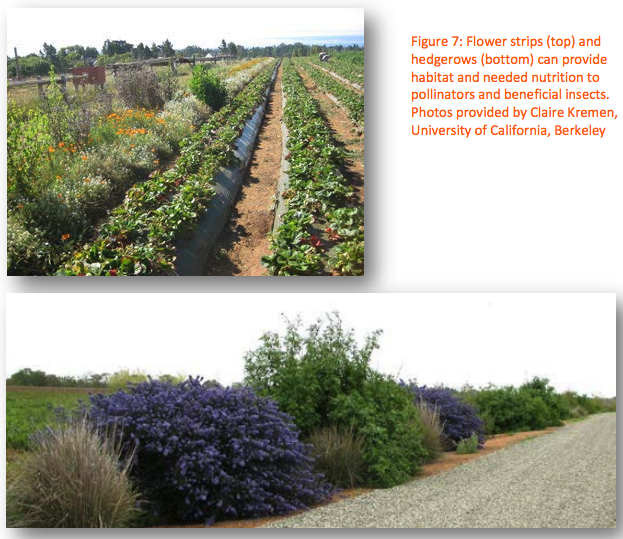
The report’s fourth chapter focuses on increased pressure from pests, including insects and weeds. The modeling of geographic ranges of various weeds is described, and some weeds are already found to be expanding northward due to changes in the climate. The chapter also addresses concerns about managed and wild pollinators, both of which are threatened by Colony Collapse Disorder, which is connected to climate change, drought, and other environmental factors. Recommended adaptive strategies to manage weeds and pests include detection and exclusion programs as well as providing habitats for native pollinators and beneficial predators.
More general recommendations for agricultural adaptation conclude the report. These include involving growers in the planning process, providing technical assistance and incentives, fostering cooperation between agencies, and facilitating information sharing between producers. These recommendations are summarized, along with those from prior chapters, on page 48 of the report.
Publication Date: 2013
Related Organizations:
- California Department of Food and Agriculture
Sectors:
Resource Category:
Resource Types:
- Assessment
- Best practice
States Affected:
Impacts:
- Air temperature
- Invasive species and pests
- Precipitation changes
- Water supply
