State Policy Forum - State Support for Local Adaptation
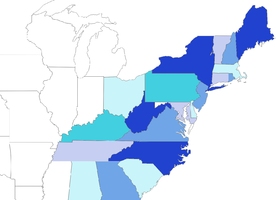
GCC hosts a bi-monthly phone call with select State representatives. This tab features resources on building local capacity for climate adaptation through state action, the topic for the December 2018 call.
123 results are shown below.
Resource
The Colorado Resiliency Resource Center is an innovative online platform that offers guidance on resilience for local government agencies, elected officials, community organizations, and members of the private sector. It is one way that Colorado’s Resiliency Office, housed within the state’s Department of Local Affairs “supports and helps empower Colorado communities” as they prepare for the effects of climate change. Information is classified into three sections related to understanding, planning, and taking action for resilience.
Authors or Affiliated Users: Bernadette Ney, Bernadette Ney
Resource Category: Planning
See Resource Login to Add to My Resource List
Resource
April 26, 2023
Washington HB 1170, passed in April of 2023, looks to improve climate resilience in Washington by updating the state’s 2012 integrated climate response strategy. Legislative findings that climate change is rapidly progressing in Washington and its citizens are already facing its impacts indicate the need for an updated strategy. HB 1170 seeks to further prepare Washington’s population by updating its resilience strategy through better cross-agency coordination, which will lower the cost of resilience and be more efficient.
Resource Category: Law and Governance
See Resource Login to Add to My Resource List
Resource
November 2022
In November of 2022, New York voters approved the Clean Air, Clean Water, and Green Jobs Environmental Bond Act, which authorizes the creation of state debt and state bonds for “preserving, enhancing, and restoring” the natural resources of New York and reducing the impacts of climate change.
Resource Category: Law and Governance
See Resource Login to Add to My Resource List
Resource
October 13, 2021
The Massachusetts Department of Fish and Game Division of Ecological Restoration (MDER) addresses the impacts of sea level rise, increased storm surge, and more frequent and severe flooding of coastal rivers through guidance and support of climate adaptation projects in coastal communities. Through its Priority Projects Program, MDER provides technical and financial assistance to local partners such as municipalities, landowners, and agencies to plan and implement projects that incorporate climate adaptation into habitat restoration. Example projects include dam removals, culvert upgrades, and salt marsh restoration, among others.
Author or Affiliated User: Sally Ann Sims
Resource Category: Solutions
See Resource Login to Add to My Resource List
Resource
August 2021
In August 2021, the California Coastal Commission (CCC), one of California’s three coastal management agencies, issued the Critical Infrastructure at Risk: Sea Level Rise Planning Guidance for California’s Coastal Zone. The guidance serves as an advisory document for the state and local governments, asset managers, and stakeholders in California to update plans and policies for critical transportation and water infrastructure to adapt to sea-level rise and flooding. The guidance is based on different studies held to be the best available science on sea-level rise in California, which includes a projection of a 6-10 feet of sea-level rise by 2100.
Resource Category: Planning
See Resource Login to Add to My Resource List
Resource
July 6, 2021
On July 6, 2021, Connecticut Governor Ned Lamont signed into law Public Law 21–115: An Act Concerning Climate Change Adaptation to increase local resilience planning options, legal authorities, and financing for adaptation and resilience projects. The main components of this law authorize the creation of municipal stormwater authorities, and increase the authority of municipal flood prevention and climate resilience boards and their ability to collect and raise funds for climate resilience projects. In addition, the law expands the scope of the state’s "green bank," the Connecticut Green Bank, beyond clean energy to adaptation- and resilience-related projects, with an emphasis on prioritizing financing for frontline communities.
Resource Category: Law and Governance
See Resource Login to Add to My Resource List
Resource
December 21, 2017
State agencies and regional stakeholders in Alabama are in the process of creating a state water management plan to ensure sustainable management of Alabama’s water resources in the face of a growing population and increasing climatic variability. State-level actions include the formation of an interagency water-focused working group to lead the development of a state water planning process, an update to the state’s Drought Management Plan, and new cross-agency efforts to increase and consolidate water resources monitoring to inform decision-making. The Alabama Rivers Alliance and other regional stakeholders are simultaneously lobbying for a state water management plan that integrates adaptive management, protects water supply for both natural and human communities, and reflects the values and opinions of Alabama stakeholders.
Author or Affiliated User: Whitney Reynier
Resource Category: Planning
See Resource Login to Add to My Resource List
Resource
May 13, 2021
On May 12, 2021, Florida Governor Ron DeSantis signed Senate Bill (S. B. ) 1954, Statewide Flooding and Sea-Level Rise Resilience, into law (Fla. Stat. § 380. 093 (2021)). Among other provisions, the law establishes the Resilient Florida Grant Program to build regional and local resilience and requires the state develop a statewide flood vulnerability and sea-level rise data assessment and Statewide Flooding and Sea-Level Rise Resilience Plan. The purpose of the law is to determine flooding risks related to increased precipitation, extreme weather, and sea-level rise and initiate a coordinated statewide effort to adapt to these risks.
Resource Category: Law and Governance
See Resource Login to Add to My Resource List
Resource
February 4, 2021
On February 4, 2021, New Jersey enacted Senate Bill (SB) 2607 amending the required components for municipal master plans in New Jersey to incorporate climate change risks and adaptation strategies. Specifically, the land use element of any master plan adopted after the bill’s passage must include a climate change and extreme weather vulnerability assessment as well as natural hazard mitigation strategies.
Resource Category: Law and Governance
See Resource Login to Add to My Resource List
Resource
May 13, 2021
On May 12, 2021, Florida Governor Ron DeSantis signed Senate Bill (S.B. 2514) into law creating the Resilient Florida Trust Fund (fund) within the Department of Environmental Protection (Fla. Stat. § 380.0935 (2021)). Accompanying S.B. 1954, the fund was established to support the Resilient Florida Grant Program and the development of the Statewide Flooding and Sea-Level Rise Resilience Plan. Funds from the Resilient Florida Trust Fund can also be put toward administrative and operational costs of the Florida Flood Hub for Applied Research and Innovation and for other coastal resilience initiatives. The fund is set to expire on July 1, 2025.
Resource Category: Law and Governance
See Resource Login to Add to My Resource List