


Adaptation Strategies for Resilient Cleanup Remedies: A Guide for Cleanup Project Managers to Increase the Resilience of Toxic Cleanup Sites to the Impacts from Climate Change
The State of Washington Department of Ecology Toxic Cleanup Program (TCP) has assessed the vulnerability of toxic cleanup sites to climate change impacts, and offers guidance in this report to site managers on these risks. The guide supports the development of site level climate vulnerability assessments and adaptation strategies for any stage of a cleanup - including site investigations; remedy selection, design, and implementation; and operation and maintenance.
To develop this guidance, a vulnerability assessment was conducted for priority climate impacts that are most likely to adversely effect the state’s cleanup sites including: sea level rise and coastal inundation; riverine flooding and extreme rain events; landslide and erosion; wildfire; and drought. The assessment highlights the cleanup remedies and specific cleanup sites that are most vulnerable to these impacts.
The report also describes how to conduct a site-specific vulnerability assessment, and provides access to a GIS tool to help cleanup project managers conduct these assessments. Per impact, the tool can demonstrate:
- Sea level rise: the areas projected to be inundated due to sea level rise at high tide (on a daily basis), or to be inundated during severe storms (on an infrequent basis)
- Flooding: areas within current 100- and 500-year flood plains.; and Puget Sound Rivers that have a projected increased risk of flooding
- Landslide and erosion: where landslides have occurred
- Wildfire: areas projected to have an increase in area burned
The guide includes an adaptation strategy developed from the vulnerability assessment. It provides practical recommendations for increasing a site’s resilience at each cleanup stage, and on developing adaptive management procedures and long-term monitoring options.
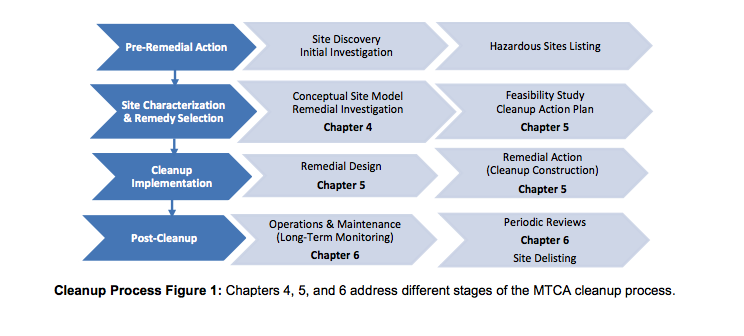 Chapter 5 provides guidance on how to increase climate resilience during the Feasibility Study and Remedial Design process including screening technologies and evaluating remedial alternatives. Section 5.4 Increasing Resilience of Remedial Alternatives offers recommendations for each of the primary climate impacts for every type of toxic site including:
- Soil and Groundwater Cleanup Sites
- Landfills
- Mining Cleanup Sites
- Sediment Cleanup Sites
TCP also published a short fact sheet that is targeted at underground storage tank owners - Storage Tanks and Climate Change. This document has more of a customer focus with information on climate impacts to storage tanks, tools to assist understanding risk, and grant/loan opportunities to improve resilience - through the Washington State Pollution Liability Insurance Agency (PLIA), Underground Storage Tank Loan and Grant Program. Chapter 7 of the primary report also has information on underground storage tank management, and advice on minimizing potential liability to climate change.
Publication Date: November 2017
Related Organizations:
Sectors:
Resource Category:
Resource Types:
- Assessment
- Assessment guide
- Monitoring
States Affected:
Impacts:
- Drought
- Precipitation changes
- Sea-level rise
- Wildfires
