All Adaptation Equity Resources
This tab includes all adaptation equity resources in the Adaptation Clearinghouse. Apply filters to view resources for a particular region or state, or search by sector. You may also sort by source of disproportionate risk.
Resources are automatically presented by date, but can also be sorted by network rating and title.
553 results are shown below.
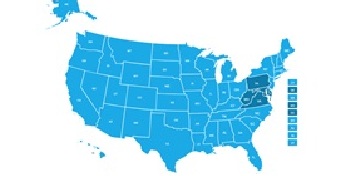
Filter by States AffectedSelect states to filter this list
All
Alabama Alaska American Samoa Arizona Arkansas California Colorado Connecticut Delaware District of Columbia Florida Georgia Guam Hawaii Idaho Illinois Indiana Iowa Kansas Kentucky Louisiana Maine Maryland Massachusetts Michigan Minnesota Mississippi Missouri Montana Nebraska Nevada New Hampshire New Jersey New Mexico New York North Carolina North Dakota Northern Marianas Islands Ohio Oklahoma Oregon Pennsylvania Puerto Rico Rhode Island South Carolina South Dakota Tennessee Texas Utah Vermont Virgin Islands Virginia Washington West Virginia Wisconsin Wyoming
Resource
March 6, 2018
The U.S. Water Alliance has investigated water assets and systems in the Great Lakes region, and the equitable management of these assets. The report describes climate change impacts on water resources, along with other equity issues such as failing infrastructure, affordability, and workforce inclusion. Opportunities for the region to adapt the water sector, and detailed strategies provide a framework for making these water systems more inclusive.
Resource Category: Solutions
See Resource Login to Add to My Resource List
Resource
March 2, 2018
The City of Los Angeles, California - in partnership with The Rockefeller Foundation’s 100 Resilient Cities (100RC) - released its first citywide Resilience Strategy. The plan describes nearly 100 adaptive actions for extreme events, disaster preparedness and resilient infrastructure, as well as pervasive issues such as social inequities, and climate change. Los Angeles Mayor Garcetti signed an executive directive in conjunction with the Strategy, that requires City departments to appoint Chief Resilience Officers, who will play a significant role in furthering the implementation of the 100 RC strategy.
Resource Category: Planning
See Resource Login to Add to My Resource List
Resource
February 2018
This policy paper examines five models for financing solar PV coupled with battery storage (solar + storage) with the aim of identifying solutions for increasing access to renewable energy in affordable housing and community facilities serving low- to moderate-income (LMI) communities. Solar + storage can reduce utility bills, increase the resilience of power systems, and, in some cases, can lead to revenue from grid services. For these reasons, solar + storage is seen as an equity strategy that can benefit LMI communities.
Authors or Affiliated Users: Robert Sanders, Lew Milford
Resource Category: Funding
See Resource Login to Add to My Resource List
Resource
February 5, 2018
The U. S. DOI/USGS Northwest Climate Science Center (NW CSC) has announced 2018 funding available for Principal Investigators (PIs) from the NW CSC University Consortium (University of Washington, Boise State Univ. , Univ. of Montana, Washington State Univ. , and Western Washington Univ. ) as well as all USGS PIs. Funded projects will address the goals identified in the NW CSC Science Agenda for 2018-23, through scientific research or data synthesis on climate impacts on endangered species, regional adaptation and management, and social systems.
Resource Category: Funding
See Resource Login to Add to My Resource List
Resource
2018
This report quantifies the benefits and costs of smart surface technologies and finds that the risks from extreme heat and weather can be offset by these technologies. It draws on Washington D. C. , Philadelphia, and El Paso as case studies and considers five smart surface technologies: cool roofs, green roofs, solar PV, reflective pavements, and urban trees. The authors find that adopting these technologies can generate millions (or even billions) of dollars in net financial benefits at the city level and can generate half a trillion dollars in net financial benefits nationwide.
Authors or Affiliated Users: Greg Kats, Keith Glassbrook
Resource Category: Solutions
See Resource Login to Add to My Resource List
Resource
The California Climate Change and Health Equity Program (CCHEP) - of the Office of Health Equity at the California Department of Public Health - “embeds health and equity in California climate change planning, and embeds climate change and equity in public health planning. ” The CCHEP is working to increase climate resilience by improving the public health and living conditions of vulnerable populations. The CCHEP also provides public health and social equity input into state agency plans and programs that affect climate vulnerability, such as transportation and land use planning.
Resource Category: Solutions
See Resource Login to Add to My Resource List
Resource
January 30, 2018
Safeguarding California in Action provides an overview of the state agency action case studies that were included in the Safeguarding California Plan - the state's climate change adaptation plan. This supplementary document provides 33 examples of actions funded by the state, that state agencies are implementing to make communities, infrastructure, services, and the natural environment more resilient to climate change.
Resource Category: Solutions
See Resource Login to Add to My Resource List
Resource
January 30, 2018
California’s Climate Adaptation Strategy 2018 Update describes the state’s progress in climate adaptation and presents an actionable plan for the near future. Building on the 2009 California Adaptation Strategy and the 2014 Safeguarding California Plan, the 2018 report is directed by Assembly Bill 1482 (2015-16) to update the state’s adaptation strategy every three years.
Resource Category: Planning
See Resource Login to Add to My Resource List
Resource
January 2018
The California Public Utilities Commission’s (CPUC) allocates its Electric Program Investment Charge (EPIC) to fund projects located in and benefiting low-income and disadvantaged communities, which is an example of utility commissions participating in equitable grid investment. EPIC funds come from rates charged to electricity customers of the state utilities and supports investments in clean energy technologies that benefit ratepayers of investor owned utilities. AB 523 directs the California Energy Commission (CEC) to expend at least 25 percent of its EPIC funds for Technology Demonstration and Deployment funding (TD&D) at sites located in, and benefiting, “disadvantaged communities,” and adds an additional requirement that the CEC expend at least 10 percent of its EPIC funds for TD&D at sites located in, and benefiting, low-income communities located in the state. The CPUC approved the allocation of $60 million of its EPIC funding to projects located in and benefiting low-income and disadvantaged communities that are also specifically prioritized for the investment of proceeds from CA’s cap-and-trade program. These investments are aimed at improving public health, quality of life, and economic opportunity in disadvantaged communities, which are defined by AB 523 as those most burdened by pollution from multiple sources and most vulnerable to its effects, considering socioeconomic characteristics and underlying health status.
Resource Category: Funding
See Resource Login to Add to My Resource List
Resource
January 8, 2018
The Alaska Department of Health and Social Services Division of Public Health released this Health Impact Assessment (HIA) addressing the projected impacts of climate change on public health across the state. In addition to providing an overview of climate change predictions for Alaska, this report is the state’s first attempt to describe a wide range of potential climate impacts to human health. Along with the assessment, the report provides monitoring recommendations for health and environmental indicators, and examples of adaptation strategies for communities to address potential health impacts.
Resource Category: Assessments
See Resource Login to Add to My Resource List