Water Sector Resources
This tab includes all resources relevant to adaptation in the water sector. Apply filters to view water sector resources for a particular region, state, resource category, or jurisdictional focus.
880 results are shown below.
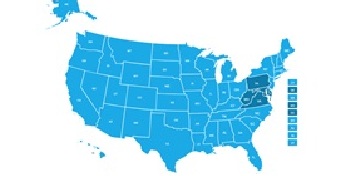
Filter by States AffectedSelect states to filter this list
All
Alabama Alaska American Samoa Arizona Arkansas California Colorado Connecticut Delaware District of Columbia Florida Georgia Guam Hawaii Idaho Illinois Indiana Iowa Kansas Kentucky Louisiana Maine Maryland Massachusetts Michigan Minnesota Mississippi Missouri Montana Nebraska Nevada New Hampshire New Jersey New Mexico New York North Carolina North Dakota Northern Marianas Islands Ohio Oklahoma Oregon Pennsylvania Puerto Rico Rhode Island South Carolina South Dakota Tennessee Texas Utah Vermont Virgin Islands Virginia Washington West Virginia Wisconsin Wyoming
Resource
June 1, 2017
The City of Asheville, North Carolina has identified climate-relate threats and hazards in this assessment to inform Asheville's climate resiliency planning efforts. The city used the information from the Assessment in updating its comprehensive plan, "Living Asheville," which was adopted in June 2018.
Resource Category: Assessments
See Resource Login to Add to My Resource List
Resource
June 2017
The City of Chester, Pennsylvania introduced the Chester City Green Stormwater Infrastructure Plan in 2017 as a means of addressing consistent stormwater pollution and overflow into the Delaware River, Chester Creek, and Ridley Creek watersheds. Chester’s combined sewer overflow (CSO) system often is overwhelmed during high rain and runoff events, which leads to increased flooding and water pollution and degradation of the river basin. The plan details Chester’s specific infrastructure needs, as well as the environmental and social benefits of green stormwater infrastructure (GSI). It also analyzes common GSI techniques including rain gardens, green roofs, stormwater planters, and porous pavements, and includes their typical cost. The plan then lists 20 potential sites within the City for GSI projects, guidance for first steps, suggestions for effective community engagement, and potential sources of both public and private funding. To fund the GSI projects, the City formed a community-based public-private partnership (CBP3), which is a different approach to financing stormwater management that expands on the traditional public-private partnership model by incorporating considerations of a community’s economic development needs. Coupled with its focus on green infrastructure as a primary means of stormwater management, this structure promotes not only improvements in water quality but in the community’s overall quality of life. The plan will also address equity through hiring local contractors for the infrastructure projects, training local workers to maintain projects, and creating new maintenance jobs for community members.
Resource Category: Planning
See Resource Login to Add to My Resource List
Resource
June 2017
The Kresge Foundation’s Environment Program has developed a strategy to address climate change impacts on water systems while prioritizing the needs of low-income communities. The report describes a set of integrated strategies for how grants and investments can best support climate-resilient and equitable water systems. Recommendations are focused on scaling up green infrastructure, water efficiency, and climate planning to address flooding, storm damage and drought impacts.
Resource Category: Funding
See Resource Login to Add to My Resource List
Resource
2017
My RainReady is a free, online tool that helps building owners diagnose the flooding risks of single-family homes and small apartment buildings, and find the best means of reducing the risk of damage from urban flooding. After the user answers a series of guided questions, My RainReady provides a tailored flood mitigation and preparedness measures, such as landscaping and construction improvements. My RainReady provides a customized report that suggests a mix of home maintenance and DIY improvements, landscaping and construction options, and flood preparedness actions.
Author or Affiliated User: Marcella Bondie Keenan
Resource Category: Data and tools
See Resource Login to Add to My Resource List
Resource
May 31, 2017
Resilient by Design is a collaborative design challenge for the San Francisco, California Bay area to develop 10 innovative community-based solutions that will strengthen the region’s resilience to sea level rise, severe storms, flooding and earthquakes. The Resilient by Design - Bay Area Challenge was modeled on New York's Rebuild by Design, a successful program pioneered by The Rockefeller Foundation in partnership with the U.S. Department of Housing and Urban Development.
Resource Category: Solutions
See Resource Login to Add to My Resource List
Resource
May 2017
This paper provides an overview of challenges faced by New York City based on existing stormwater management infrastructure and regulation. It also summarizes the City's green infrastructure goals and the benefits and costs expected from meeting these goals. The report then delves into the issue of using private property to house green infrastructure, including the difficulty of scaling up these installations and using public money to increase the volume of green infrastructure on private property.
Author or Affiliated User: Justin Gundlach
Resource Category: Solutions
See Resource Login to Add to My Resource List
Resource
May 2017
In May 2017, the U. S. Environmental Protection Agency released a guide on how stormwater management agencies could work with parks departments to integrate green infrastructure solutions into park lands. The guide walks municipalities through the steps of developing a green infrastructure program including: (1) identifying and engaging partners, (2) building relationships, (3) leveraging funding, (4) identifying opportunities for green infrastructure, (5) planning maintenance, and (6) undertaking pilot projects.
Resource Category: Solutions
See Resource Login to Add to My Resource List
Resource
May 26, 2017
Pursuant to Broward County Ordinance 2017-16, Broward County, Florida is referring to new groundwater maps that display how sea-level rise and precipitation changes are expected to affect future groundwater levels in reviewing applications for surface water management (i. e. , drainage infrastructure) licenses required for certain development projects. Due to the porous limestone geology throughout much of Southeast Florida, saltwater intrusion and increasing groundwater table levels are an increasingly concerning effect of rising sea levels.
Resource Category: Law and Governance
See Resource Login to Add to My Resource List
Resource
2017
The Atlas is an online “marketplace and recommendation engine” for environmental technology and infrastructure solutions. Over 250 sustainable, resilient and/or green infrastructure projects and tools are showcased on the Atlas website. These climate adaptive infrastructure solutions can be used to support the new design of similar systems.
Author or Affiliated User: Elle Hempen
Resource Category: Solutions
See Resource Login to Add to My Resource List
Resource
April 6, 2017
The Using Nature to Address Flooding website provides a guide of nature-based solutions for managing coastal, riverine, and urban stormwater flooding. The site includes case studies of projects from across the country to help communities in adaptive planning for flooding by identifying with successfully implemented nature-based solutions.
Resource Category: Solutions
See Resource Login to Add to My Resource List