Water Sector Resources
This tab includes all resources relevant to adaptation in the water sector. Apply filters to view water sector resources for a particular region, state, resource category, or jurisdictional focus.
880 results are shown below.
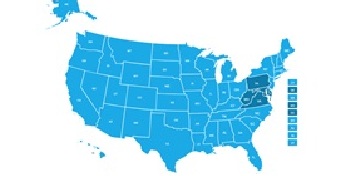
Filter by States AffectedSelect states to filter this list
All
Alabama Alaska American Samoa Arizona Arkansas California Colorado Connecticut Delaware District of Columbia Florida Georgia Guam Hawaii Idaho Illinois Indiana Iowa Kansas Kentucky Louisiana Maine Maryland Massachusetts Michigan Minnesota Mississippi Missouri Montana Nebraska Nevada New Hampshire New Jersey New Mexico New York North Carolina North Dakota Northern Marianas Islands Ohio Oklahoma Oregon Pennsylvania Puerto Rico Rhode Island South Carolina South Dakota Tennessee Texas Utah Vermont Virgin Islands Virginia Washington West Virginia Wisconsin Wyoming
Resource
February 2014
The Pioneer Valley Climate Action and Clean Energy Plan presents an impact assessment of climate change in the Pioneer Valley region of Massachusetts, and provides many local and regional climate adaptation strategies. This plan identifies the amounts and sources of the Pioneer Valley’s greenhouse gas emissions; offers regional targets for GHG reduction in a Clean Energy Plan Update; and recommends detailed strategies for both mitigating and adapting to climate change impacts.
Resource Category: Planning
See Resource Login to Add to My Resource List
Resource
February 2014
This case study analyzes the Green Infrastructure Plan released by Lancaster, Pennsylvania in 2011 and estimates quantified benefits for the Plan over a 25-year scenario.The study finds that green infrastructure provides $2.8 million in energy, air quality, and climate related benefits annually, reduced gray infrastructure capital costs by $120 million, and reduced wastewater pumping and treatment costs by $661,000 a year, easily exceeding the costs of implementing green infrastructure.
Resource Category: Solutions
See Resource Login to Add to My Resource List
Resource
January 2014
“Planning and Drought” (PAS Report No. 574) presents best practices and case studies in drought planning. The report offers a comprehensive guide for citizens, planners, and communities to explore what drought is, how to track it, its impacts, and how planners and communities can prepare to mitigate its effects. This publication is the result of a partnership between the American Planning Association (APA), the National Drought Mitigation Center at the University of Nebraska-Lincoln, and the National Integrated Drought Information System (NIDIS).
Authors or Affiliated Users: James Schwab , Jeff Brislawn, Marilyn Hall, Cody Knutson, Marsha Prillwitz, Kelly Redmond, Mark Svoboda
Resource Category: Planning
See Resource Login to Add to My Resource List
Resource
The National Stormwater Management Calculator is one tool found in the “Green Values” Stormwater Toolbox developed by the Center for Neighborhood Technology. The National Green Values Calculator (GVC) is focused on stormwater run-off reduction, and is a tool for comparing the performance, costs, and benefits of green infrastructure, or Low Impact Development (LID), to conventional stormwater practices. The GVC is meant for a single site, or a campus of buildings contained on a single site.
Resource Category: Planning
See Resource Login to Add to My Resource List
Resource
Founded in 1987, the Clean Water State Revolving Fund (CWSRF) is a federal-state partnership program administered by the U. S. Environmental Protection Agency (EPA) that provides low-interest loans and other low-cost financing for water infrastructure projects for eleven project types, including: constructing municipal wastewater facilities; controlling nonpoint sources of pollution; building decentralized wastewater treatment systems; creating green infrastructure projects; and protecting estuaries.
Resource Category: Funding
See Resource Login to Add to My Resource List
Resource
2014
Published by the National Association of Clean Water Agencies (NACWA), Navigating Litigation Floodwaters provides an overview of legal issues associated with user-fee funded municipal separate storm sewer systems (MS4s) stormwater programs, as well as a summary of selected legal decisions and pending cases. The report represents how different courts across the nation have addressed the issue of stormwater management, the types of legal analyses that have been used when evaluating MS4 fee programs and the kinds of factors that have been relevant in the courts’ deliberations.
Resource Category: Solutions
See Resource Login to Add to My Resource List
Resource
2014
New York City’s Green Infrastructure Program utilizes an adaptive management approach based on pilot project monitoring results and information collected and assessed from green infrastructure demonstration projects. Neighborhood Demonstration Areas were established in New York City pursuant to a March 2012 Modified Consent Order with the New York State Department of Environmental Conservation. This Order formalized the City’s inclusion of green infrastructure as an important component of its plan to reduce combined sewer overflows (CSOs) into local waterways, and improve the ecological health and quality of New York City harbor water.
Resource Category: Solutions
See Resource Login to Add to My Resource List
Resource
January 2014
The University of Maryland Environmental Finance Center (EFC) developed this manual to provide information to local governments about progressive stormwater management practices, including green infrastructure, and to provide a model for creating policies and programs to finance these practices. The report’s introduction asserts that a paradigm shift is underway in stormwater finance, and local government staff have a critical role to play in leading that shift.
Resource Category: Planning
See Resource Login to Add to My Resource List
Resource
January 1, 2014
The 2013 California Green Building Standards Code, or CALGreen, established by the California Building Standards Commission, went into effect January 1, 2014. California first adopted CALGreen in 2010, becoming the first statewide mandatory green building code in the country. The Code establishes minimum green building standards through uniform regulations of most new residential and non-residential California buildings. The regulations are intended to reduce construction waste, make buildings more efficient in the use of materials and energy, and reduce environmental impacts during and after construction.
Resource Category: Law and Governance
See Resource Login to Add to My Resource List
Resource
The U.S. Environmental Protection Agency's (EPA) Healthy Watersheds Initiative encourages states, local governments, watershed organizations and others to protect and maintain healthy water bodies.
Resource Category: Solutions
See Resource Login to Add to My Resource List