All Adaptation Equity Resources
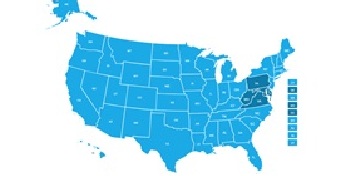
This tab includes all adaptation equity resources in the Adaptation Clearinghouse. Apply filters to view resources for a particular region or state, or search by sector. You may also sort by source of disproportionate risk.
Resources are automatically presented by date, but can also be sorted by network rating and title.
553 results are shown below.
Filter by States AffectedSelect states to filter this list
All
Alabama Alaska American Samoa Arizona Arkansas California Colorado Connecticut Delaware District of Columbia Florida Georgia Guam Hawaii Idaho Illinois Indiana Iowa Kansas Kentucky Louisiana Maine Maryland Massachusetts Michigan Minnesota Mississippi Missouri Montana Nebraska Nevada New Hampshire New Jersey New Mexico New York North Carolina North Dakota Northern Marianas Islands Ohio Oklahoma Oregon Pennsylvania Puerto Rico Rhode Island South Carolina South Dakota Tennessee Texas Utah Vermont Virgin Islands Virginia Washington West Virginia Wisconsin Wyoming
Resource
June 2016
The California Department of Water Resources (DWR) has developed a web-based application to assist in evaluating disadvantaged community status throughout the State. This publicly available mapping tool shows disadvantaged communities of California, in funding areas as recognized pursuant to California Proposition 1 and Proposition 84.
Resource Category: Data and tools
See Resource Login to Add to My Resource List
Resource
2016
The City of New Orleans is prioritizing efforts to provide safe, affordable housing as part of its resilience strategy. In June 2016, the City released its Housing for a Resilient New Orleans: Five-Year Strategy, that lays out the City's approach for protecting and enhancing safe and affordable housing as the City continues to rebound from Katrina and other hurricanes. Although the Strategy does not explicitly address climate change, it does talk about the resilience challenges posed by the lack of safe and affordable housing and it discusses the city's plan for preserving and enhancing existing affordable housing and building new housing.
Resource Category: Planning
See Resource Login to Add to My Resource List
Resource
May 4, 2016
In May 2016, the City Council of Satellite Beach in Brevard County, Florida approved Ordinance 1113, amending the Infrastructure, Coastal Management and Conservation, Intergovernmental Coordination, and Capital Improvements sections of the town’s Comprehensive Plan to adopt Adaptation Action Areas and a shared planning horizon and sea-level curve for city projects.
Resource Category: Law and Governance
See Resource Login to Add to My Resource List
Resource
July 2015
Resilience AmeriCorps recruits and trains AmeriCorps VISTA (Volunteers In Service To America) members to serve low-income communities across the country by developing plans and implementing projects that increase resilience-building capacity. The initiative was originally announced in 2015 in response to recommendations from President Obama’s State, Local, and Tribal Leaders Task Force on Climate Preparedness and Resilience. Current Resilience AmeriCorps projects are addressing a wide range of resilience needs, including climate change, extreme weather, financial instability, and food insecurity through long-term planning, risk communication, community loan programs, and urban food production.
Resource Category: Solutions
See Resource Login to Add to My Resource List
Resource
April, 2016
In April 2016, the Los Angeles City Council unanimously passed a groundbreaking ordinance to address environmental justice concerns within three distinct neighborhoods: Boyle Heights, Pacoima-Sun Valley, and Wilmington. For decades, these three communities – comprised primarily of low-income, Latinx individuals and families – suffered a wide range of health effects, due mostly to the high concentration of polluting industrial sites within their neighborhoods. To address these inequalities, LA City Council passed and implemented the Clean Up Green Up Ordinance with a three-pronged goal in mind: (1) to reduce pollution in the most toxic, hotspot areas; (2) to prevent additional pollution; and (3) to revitalize these neighborhoods through supporting local businesses and economic development.
Resource Category: Law and Governance
See Resource Login to Add to My Resource List
Resource
April 22, 2016
The City of Seattle, Washington released an Equity and Environment Agenda in 2016 - a plan that lays out policy goals and strategies for addressing race and social justice in environmental programs and ensuring benefits are shared by all residents equally.
Resource Category: Solutions
See Resource Login to Add to My Resource List
Resource
April 22, 2016
This report outlines New York City’s Housing Authority (NYCHA) plan to support safe, clean, and connected communities that reverse the downward spiral of disinvestment. The plan specifically includes climate change as a risk to the community, public health, and public housing - noting that if Hurricane Sandy is predictive, climate will disproportionately impact low-income people and public housing residents.
Resource Category: Planning
See Resource Login to Add to My Resource List
Resource
April 18, 2016
San Francisco’s Resilience Strategy is built around four goals which address six key challenges that face the City including earthquakes, climate change, sea level rise, aging infrastructure, social inequity, and “unaffordability.”
Resource Category: Planning
See Resource Login to Add to My Resource List
Resource
April 14, 2016
Supported by Oxfam America, this study documented the views of residents from three vulnerable Louisiana coastal parishes - Terrebonne, Lafourche, and Plaquemines. These parishes face extreme coastal land loss from flooding and sea level rise, and other critical climate and social impacts. The study focuses on nonstructural coastal flooding mitigation measures, such as restoring coastal marshlands. A series of interviews were conducted to investigate how residents understand and respond to the challenges of sea level rise and climate change.
Resource Category: Solutions
See Resource Login to Add to My Resource List
Resource
April 2016
The Maryland Climate and Health Profile report details current and future impacts of climate change on public health in Maryland. The Maryland Department of Health and Mental Hygiene (DHMH) and the University of Maryland School of Public Health have identified adverse health outcomes that are projected to be exacerbated across the state using historical climate data along with health data - providing the first quantitative estimate of how extreme events are affecting the public health in Maryland, up to 2040.
Author or Affiliated User: Clifford Mitchell
Resource Category: Assessments
See Resource Login to Add to My Resource List