Water Sector Resources
This tab includes all resources relevant to adaptation in the water sector. Apply filters to view water sector resources for a particular region, state, resource category, or jurisdictional focus.
880 results are shown below.
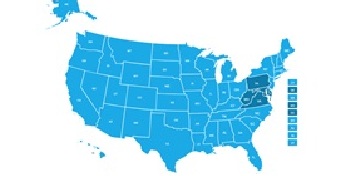
Filter by States AffectedSelect states to filter this list
All
Alabama Alaska American Samoa Arizona Arkansas California Colorado Connecticut Delaware District of Columbia Florida Georgia Guam Hawaii Idaho Illinois Indiana Iowa Kansas Kentucky Louisiana Maine Maryland Massachusetts Michigan Minnesota Mississippi Missouri Montana Nebraska Nevada New Hampshire New Jersey New Mexico New York North Carolina North Dakota Northern Marianas Islands Ohio Oklahoma Oregon Pennsylvania Puerto Rico Rhode Island South Carolina South Dakota Tennessee Texas Utah Vermont Virgin Islands Virginia Washington West Virginia Wisconsin Wyoming
Resource
Administered by the California Energy Commission, the Public Interest Energy Research Program (PIER) was created to advance science and technology in the fields of energy efficiency, renewable energy, advanced electricity technologies, energy-related environmental protection, transmission and distribution, and transportation technologies. The PIER Program awards up to $62 million annually to support new energy services and products that create statewide environmental and economic benefits. Priority research areas defined in PIER’s five-year Climate Change Research Plan are: monitoring, analysis, and modeling of climate; analysis of options to reduce greenhouse gas emissions; assessment of physical impacts and of adaptation strategies; and analysis of the economic consequences of both climate change impacts and the efforts designed to reduce emissions.
Resource Category: Funding
See Resource Login to Add to My Resource List
Resource
April 2016
The U. S. Environmental Protection Agency (EPA) National Water Program Workplan describes the actions that the National Water Program was planning to take in 2016 to implement the National Water Program 2012 Strategy: Response to Climate Change. The 2012 Strategy describes long-term goals for the EPA’s management of sustainable water resources under the impacts of climate change. The EPA states that the Workplan is intended to be a roadmap to guide program planning and inform decision-makers during the Agency’s planning and budgeting process.
Resource Category: Planning
See Resource Login to Add to My Resource List
Resource
March 2016
From the California Natural Resources Agency, Safeguarding California: Implementation Action Plans is a progress report describing how the state government is responding to the recommendations from the 2014 Safeguarding California: Reducing Climate Risk report and implementing the adaptation strategies.
Author or Affiliated User: Joseph Wall
Resource Category: Planning
See Resource Login to Add to My Resource List
Resource
March 10, 2016
This guide from the U. S. Environmental Protection Agency (EPA) provides practical solutions to help drinking water utilities respond to and recover from drought - although it is not intended to serve as regulatory guidance. The interactive, user-friendly guide provides worksheets, best practices, videos and key resources for managing drought emergencies and building long-term resilience. It also relays lessons learned and case studies for seven small- to medium-sized utilities nationwide that have faced extreme drought conditions.
Resource Category: Solutions
See Resource Login to Add to My Resource List
Resource
March 2016
President Obama established the National Drought Resilience Partnership (NDRP) in November 2013 as part of his Climate Action Plan. On March 21, 2016, Obama signed a Presidential Memorandum on Building National Capabilities for Long-Term Drought Resilience, directing the NDRP to work collaboratively to deliver on a Federal Action Plan designed to complement state, regional, tribal and local drought preparedness, planning and implementation efforts. This Action Plan lays out a series of activities to fulfill the President’s drought resilience goals, which are intended to be undertaken in 2016 or 2017.
Resource Category: Planning
See Resource Login to Add to My Resource List
Resource
March 2016
As a part of the Department of Homeland Security (DHS)’s Regional Resiliency Assessment Program (RRAP) - this research focuses on the local and regional impacts of climate change in the Casco Bay area, the most developed and populous region in Maine. The report focuses primarily on vulnerabilities that may affect the region’s ability to maintain its critical infrastructure systems, and provides corresponding Resilience Enhancement Options that DHS and other partners may utilize in climate adaptation planning.
Resource Category: Assessments
See Resource Login to Add to My Resource List
Resource
February 22, 2016
The Delaware Department of Natural Resources and Environmental Control's Division of Watershed Stewardship and Environmental Finance are now accepting project proposals from state, county and municipal governments and governmental subdivisions for matching grants for wastewater and surface water project planning. Grants are revolving and proposals are due approximately the last week of February, May, August, and November.
Resource Category: Funding
See Resource Login to Add to My Resource List
Resource
2016
The Bureau of Reclamation's Drought Response Program provides assistance to water users for drought contingency planning, including for the consideration of climate change information and for taking actions that will build long-term resiliency to drought.
Resource Category: Funding
See Resource Login to Add to My Resource List
Resource
February 2016
The Cumberland County Climate Resiliency Plan outlines the priority climate impacts the County faces, observed and projected climate trends, and a Strategic Action Plan. The report presents existing climate and non-climate related conditions of concern; four climate risks that are currently serious threats to the County including heat waves, severe weather events, heavy precipitation events, and prolonged droughts; and the priority impacts associated with each climate risk. In 2015, the Model Forest Policy Program, the Cumberland River Compact, and Sustainable Sandhills worked together to facilitate a climate adaptation planning process and develop this Climate Resiliency Plan for Cumberland County, North Carolina.
Author or Affiliated User: Alba Polonkey
Resource Category: Planning
See Resource Login to Add to My Resource List
Resource
February 2016
This Policy Platform outlines actionable strategies for federal agencies that can be implemented immediately to protect and restore the watersheds of the western U. S. The policy recommendations were developed by Carpe Diem West’s Healthy Headwaters Alliance, offering near-term policy solutions for the long-term resilience of forested headwaters for water supply. Forested watershed and source water protection is critical for climate resiliency. Watersheds filter pollutants, control erosion, regulate temperature, attenuate floods, and buffer human activities from drinking water resources.
Resource Category: Solutions
See Resource Login to Add to My Resource List